Grease traps and local food service businesses
Standing water in a prep sink can hold up kitchen work in Santa Clara, Santa Clara County. Grease separates from wastewater inside the unit, while food solids settle. Without regular removal, that material can accumulate around the outlet and interfere with drainage. A clogged drain line can also leave water in the sink.
Check the equipment location before deciding what to request. A compact unit beneath a sink or kitchen floor may need grease trap pumping. An in-ground interceptor has covers at ground level; larger units are emptied by vacuum truck. Call about grease interceptor pumping and ask a provider serving Santa Clara how kitchen use and local requirements affect the schedule.
Grease trap services in Santa Clara, CA
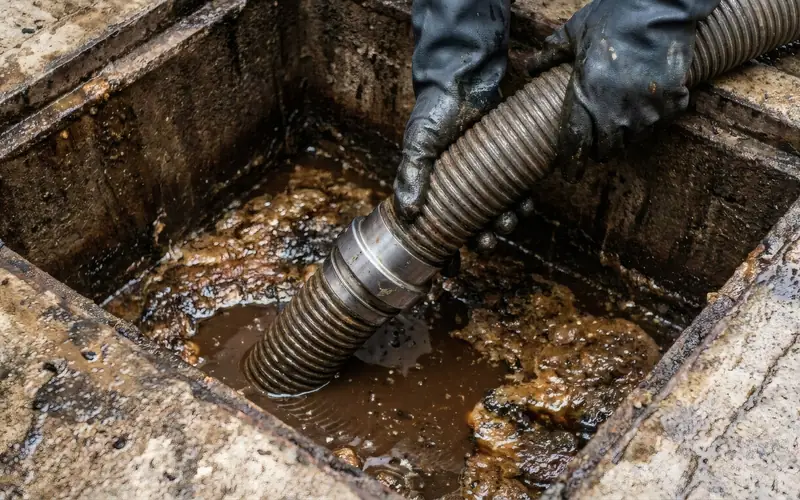
Grease Trap Pumping
When you call, ask whether the pump-out includes settled food solids. Those solids take up space in the trap along with the grease. Grease trap pumping generally removes the accumulated contents, including grease, wastewater and solids, leaving room for the trap to receive wastewater.
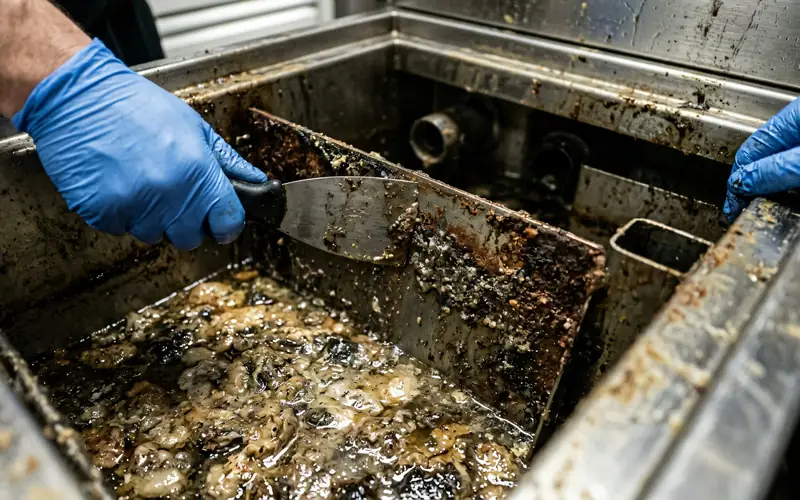
Grease Trap Cleaning
Cleaning a grease trap differs from pumping because it also addresses residue on reachable interior surfaces. Consider grease trap cleaning when grease remains on the walls or baffle after the contents have been removed. Buildup around the outlet tee can restrict the passage of wastewater.
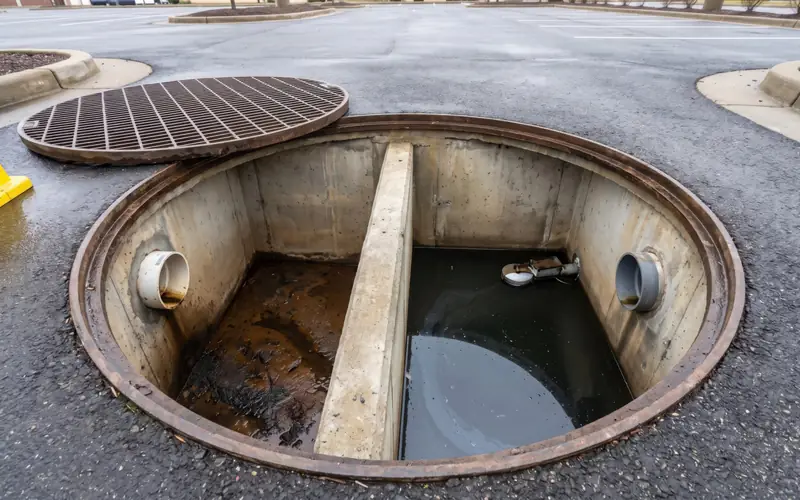
Grease Interceptor Cleaning
Grease interceptor cleaning generally includes removing the contents and clearing buildup from reachable walls, baffles and the outlet tee. A kitchen may need grease interceptor cleaning when residue remains attached inside after emptying. Grease around the outlet can make it harder for wastewater to pass through.
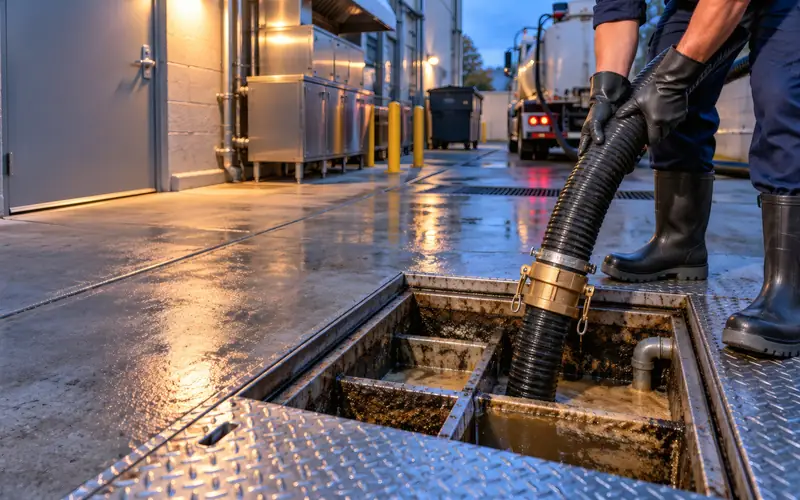
Grease Interceptor Pumping
A kitchen may have an interceptor with accumulated grease and settled solids that need to be removed. When arranging grease interceptor pumping, ask the provider what service records will be left after the work. Pumping generally removes the grease, wastewater and solids from the interceptor.
What to Have Ready When You Call
A few details can help the service provider assess your needs and discuss the right appointment.
- Your service address and ZIP code.
- Whether you have an indoor grease trap or an outdoor interceptor.
- The unit’s size, if known.
- Approximately when it was last pumped.
- Any backup, odors, slow drainage, or inspection deadline.
- The number of units or locations needing service.
Share what you know. You do not need every detail before calling.
Local grease trap requirements
Grease trap requirements depend on the address your kitchen uses. The city or sewer district serving that address usually sets the rules. Before setting a service schedule, ask the responsible office about cleaning frequency, required records and permits. Keep the hauler’s record from every visit with your kitchen paperwork.
Nearby service areas
The same number reaches providers serving nearby areas. Businesses with more than one location can call once per site and enter each ZIP code.
Common grease trap questions
How often do Santa Clara restaurants need grease trap pumping?
The right pumping schedule depends on the trap's size, what is on the menu and the volume of wastewater it handles. Local requirements also matter. Your sewer utility may also set a schedule or a fullness limit, so ask it before you settle on one. A provider can suggest timing for your kitchen.
Do providers serving Santa Clara handle in-ground interceptors?
Many providers handle in-ground interceptors. Before calling to check availability, identify the unit you have and look for its size in your service records. Mention any obstacles that could make the covers hard to reach.
Who will I be speaking to when I call?
After the ZIP-code prompt, you will speak with an independent service provider serving your area. You can discuss the work, confirm pricing and availability, and book directly with that company. This website helps connect callers with service providers; it does not perform the cleaning.